

When you buy a home in California, you’re handed a Natural Hazard Disclosure (NHD) report. It maps out earthquake faults, flood zones, fire severity areas, and a handful of other officially designated risk zones.
It feels thorough.
But here’s something most buyers don’t realize:
Your standard Natural Hazard Disclosure is not required to tell you whether your home is near a high-pressure gas transmission pipeline or a hazardous liquids pipeline.
That’s not a conspiracy. It’s just how the law is written.
And for something that can affect safety, insurance, development rights, and resale value, it’s worth paying attention.

Pipelines 101: What Are We Talking About?
When people hear “gas line,” they think about the pipe that feeds their stove or water heater. That’s not what we’re discussing here.
There are two major types of large-scale pipelines that matter to homebuyers:
1. Gas Transmission Pipelines
These are large, high-pressure pipelines that move natural gas over long distances — from processing facilities to cities and regions. They’re part of major energy infrastructure and are regulated at both the federal and state level.
They operate at significantly higher pressure than neighborhood distribution lines.
2. Hazardous Liquids Pipelines
These carry crude oil or other liquid fuels between refineries, terminals, and distribution hubs. They are also federally regulated and often follow established utility corridors, rail lines, or open space areas.
These are not small neighborhood pipes. These are commercial energy arteries.

How Can Pipelines Affect a Homebuyer?
Pipelines are generally safe and heavily regulated. Millions of people live near them without incident.
But “generally safe” doesn’t mean “irrelevant.”
In rare situations, if a pipeline is compromised, consequences can include fire, explosion, environmental damage, or evacuation zones. Even if nothing ever happens, proximity can still influence:
- Insurance underwriting decisions
- Perception of property value
- Future resale conversations
- Easement or development limitations
And here’s the key point: if a pipeline runs through a recorded easement on the property, that easement can limit what you build, where you build, and how you use portions of the land.
That’s not something most buyers want to discover after closing.
Why Isn’t This in the Natural Hazard Disclosure?
California’s Natural Hazard Disclosure law focuses on officially mapped statutory hazard zones: flood plains, earthquake fault zones, fire hazard severity areas, and similar categories.
Pipelines don’t fall under those statutory categories.
Some third-party disclosure companies may include pipeline information as an additional courtesy item, but they are not legally obligated to do so — and even when they do, the information may be generalized.
So if you’re assuming “If it were important, it would be on the NHD,” that assumption deserves a second look.
How to Check for Pipelines
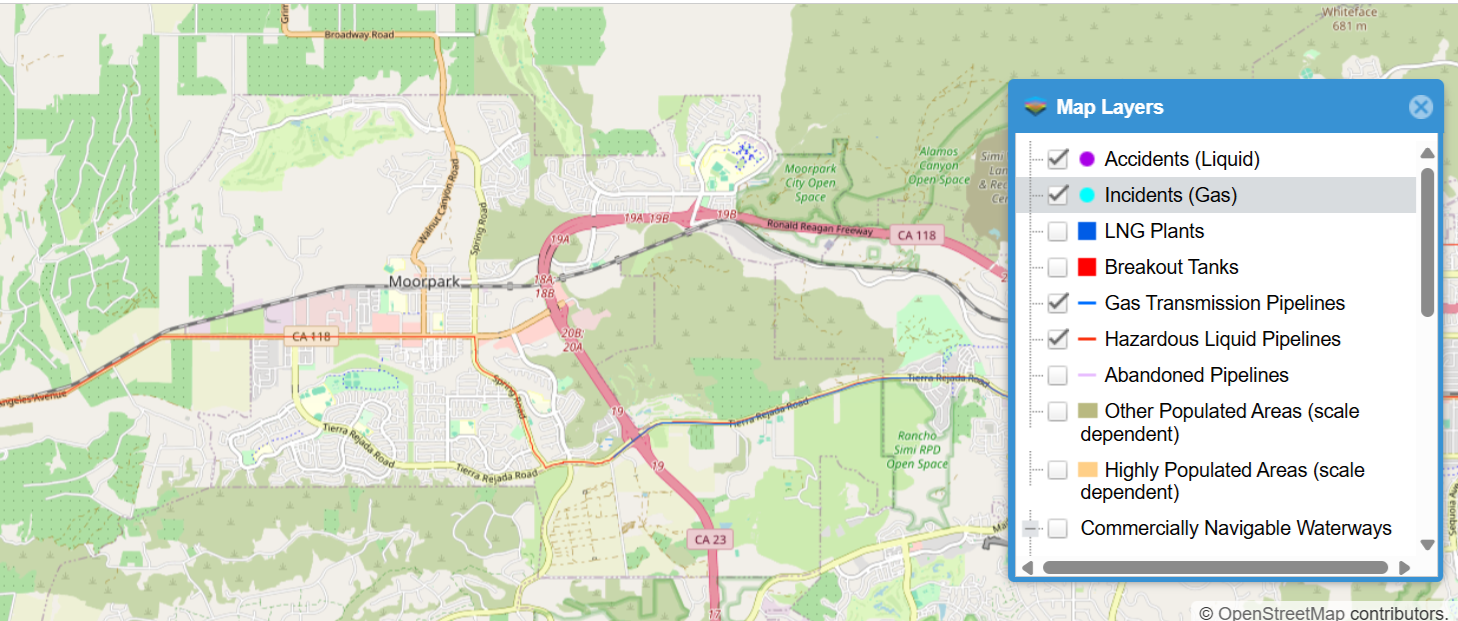
The best publicly available resource is the National Pipeline Mapping System (NPMS), maintained by the U.S. Department of Transportation.
You can search for pipeline locations here: https://pvnpms.phmsa.dot.gov/PublicViewer/
How It Works
- Enter the property address.
- View mapped gas transmission and hazardous liquids pipelines.
- Zoom in to see whether corridors run near or across the property.
Keep in mind:
- The map shows transmission and hazardous liquid pipelines — not smaller neighborhood distribution lines.
- It provides corridor location data but may not show precise depth or exact easement language.
For full clarity, pipeline maps should be reviewed alongside the preliminary title report, which will identify recorded easements.

Why Buyers Should Pay Attention
For most homes, pipeline proximity is simply a matter of awareness. But buyers should know:
- Is the home directly adjacent to a corridor?
- Is there a recorded utility easement crossing the lot?
- Will insurance carriers have underwriting questions?
- Will future buyers raise concerns when you sell?
These are practical questions — not alarmist ones.
Buying a home is about reducing avoidable surprises. And this is one of those areas where a little due diligence goes a long way.
The Difference Between a Transaction and Representation
Many agents focus on getting you into escrow quickly. Fewer focus on helping you understand infrastructure risks that don’t automatically show up in bold print.
This is where thoughtful representation matters.
As a buyer’s agent, I don’t just forward you disclosures and hope for the best. I help you:
- Review maps beyond the standard NHD
- Cross-reference title easements
- Ask the right questions before contingencies are removed
- Evaluate whether a risk is theoretical, manageable, or a deal-breaker
My job isn’t just to unlock doors. It’s to help you avoid pitfalls you didn’t know to look for.
If you want a buyer’s agent who digs deeper, anticipates issues, and protects your interests before they become problems, I’m the one to call.
Let’s make sure your next home is a smart investment — not just a good showing.


Join The Discussion